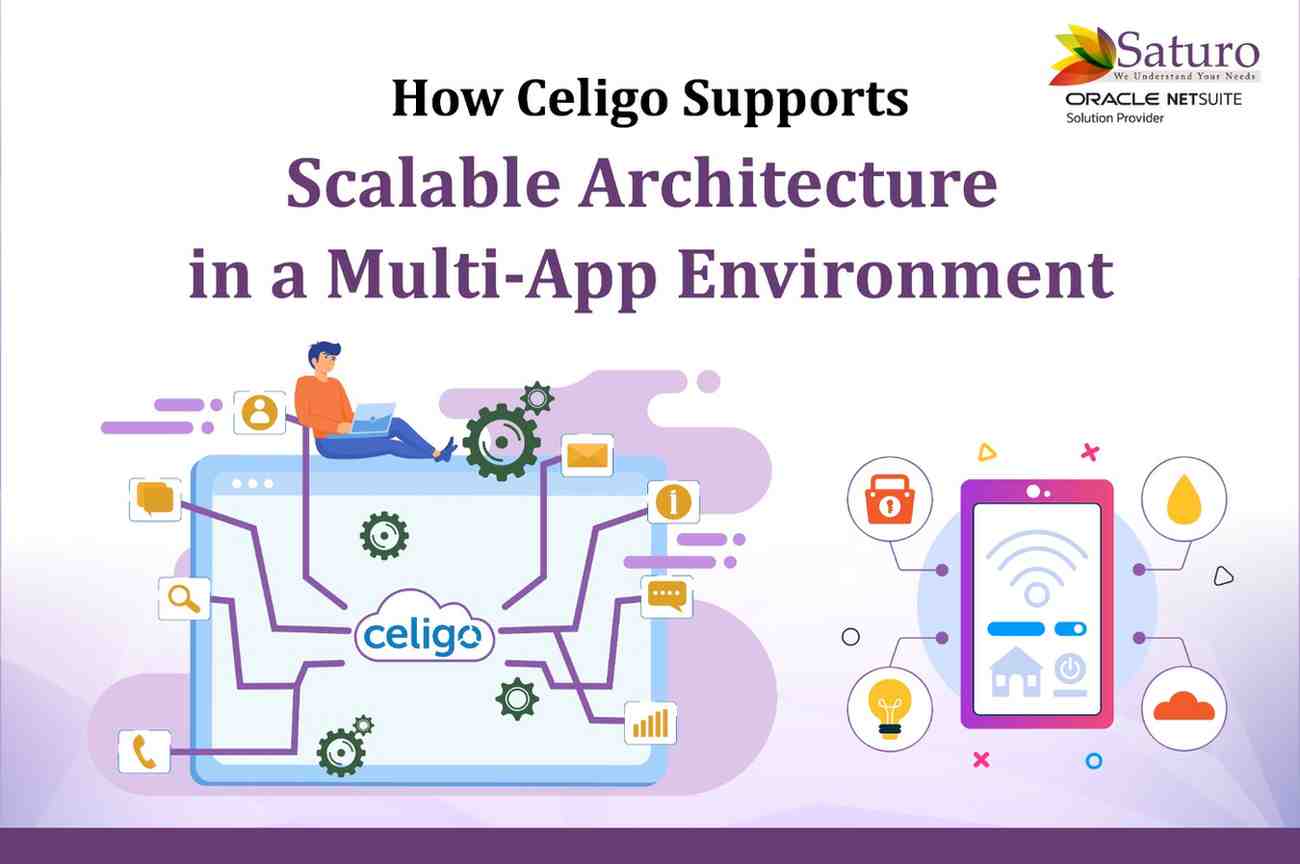
Modern businesses no longer rely on a single software platform. Instead, they use a multi-app environment made up of specialized tools for sales, along with finances and marketing, added with statistics and more. This approach enables flexibility and innovation. But it also introduces new challenges, which include data silos or interaction complexity and operational overhead.
This is where Celigo steps in. As a modern integration platform, Celigo provides the foundation for building scalable architectures that keep multiple systems connected, along with being adaptable even as business needs change.
Performance benefits of using Celigo
Here are the various performance benefits.
1. Reduced maintenance overhead through shared configs
Instead of duplicating setup for each app, shared configurations allow integrations to be reused and adapted easily. This saves time and reduces operational friction.
2. Centralized monitoring streamlines operations
The dashboard of Celigo gives teams a clear view of all integration flows across multiple apps. Errors can be identified and resolved quickly. It ensures uninterrupted operations.
Key features that enable multi-app scalability
Here are the different features that will allow multi-app scalability.
1. Unified builder workspace, dashboard, governance
Celigo provides a single environment for designing, managing and governing integrations. Instead of juggling multiple tools, teams can build and monitor all integrations in one place.
2. Environment promotion, role-based access
Prompting interactions from development to staging to production is simplified through environment promotion features. Role-based access ensures that only authorized users can make changes that preserve security and integrity.
Technical challenges
Here are certain technical challenges that you will be able to solve easily.
1. Maintaining consistency across dev/staging/production
Scaling integrations requires careful promotion between environments to ensure flows behave consistently at every stage. The environment of Celigo promotion helps manage this process effectively.
2. Version control & impact auditing for flow changes
In a multi-app environment, changes can have cascading effects. Celigo includes governance and versioning tools. But teams still need processes for tracking updates carefully.
Final words
As companies adopt more socialized applications, scalable integration becomes essential to avoid fragmentation and inefficiency. Celigo provides the tools to build and maintain a robust integration layer that supports multiple apps simultaneously while minimizing overhead. For companies managing more than ten applications, Celigo is the modern backbone of a truly scalable architecture.
FAQs
1. What does scalable integration mean?
It refers to building integrations that can easily expand to support new apps along with higher data volumes and evolving business processes without rework.
2. Can Celigo support multiple apps and systems at once?
Yes. Celigo is designed to manage multiple integrations simultaneously through a unified platform, which makes it ideal for a multi-app environment.
3. What happens when an app is replaced or upgraded?
The modular design of Celigo allows flows to be reconfigured or swapped with minimal disruption, which avoids complete resets during app transitions.
4. Can Celigo manage 10+ apps simultaneously?
Yes. Many businesses run ten or more integrations at once. It leverages shared configurations of Celigo along with centralised monitoring to stay organised.
5. How is multi-app monitoring handled?
Teams can monitor all interactions in real time through Celigo’s dashboard. They can also track errors and maintain performance visibility across environments.
To Know more about software services, feel free to reach us on:
Website: https://www.saturotech.com
Email ID: sales@saturotech.com
YouTube: https://www.youtube.com/channel/UC69yIWnRwPV04KydM64sXTw/videos